
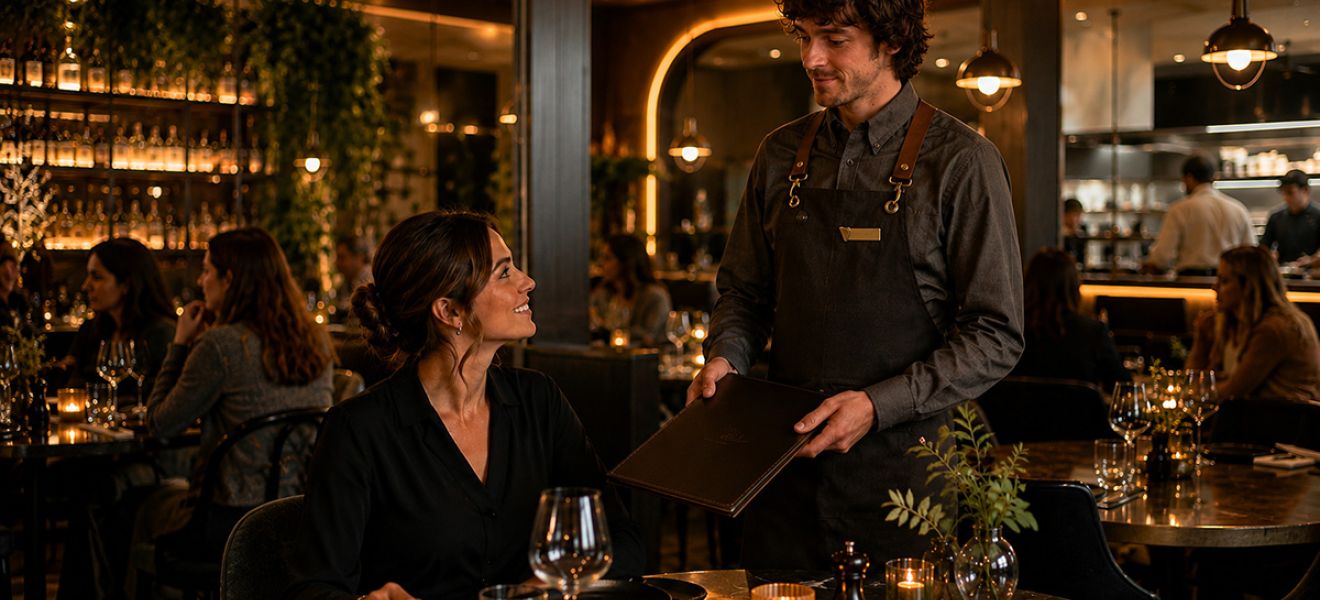
What Customers Notice Before They Have Read the Menu
Before a customer has read your menu, spoken to your staff or tasted your food, they've already started deciding how they feel about your business.
Walk into almost any café, pub or restaurant, and that judgement begins almost immediately.
Perhaps the room feels calm and welcoming. Perhaps it feels energetic and full of character. Or perhaps something feels slightly unsettled, even if you cannot immediately explain why. Most customers reach that conclusion long before they have ordered a drink or chosen what to eat.
Hospitality is unusual because customers spend time inside the brand rather than simply purchasing from it.
A customer doesn't just buy a meal or a coffee. They experience the welcome, the atmosphere, the conversations, the pace of service and the environment over the course of an hour or more. Every interaction quietly reinforces—or weakens—the impression the venue creates.
Few people consciously analyse those individual moments. Our brains are remarkably good at turning dozens of tiny observations into one instinctive judgement. We simply leave with a feeling that somewhere either felt right or it didn't.
That first impression rarely comes from one decision alone.
Hospitality Is Experienced as One Complete System
Owners and managers naturally make decisions one at a time.
Menus are developed separately from interiors. Lighting is considered independently of staffing. Music, service routines, table layouts, uniforms and customer flow often become individual conversations, each solving its own practical problem.
Customers never experience them that way.
The customer doesn't walk into a venue and mentally separate the quality of the lighting from the confidence of the welcome or the pace of the service. They experience one environment, and within moments they have formed an instinctive view of how the venue feels.
That is why two restaurants serving similar food can leave completely different lasting impressions.
A beautifully designed dining room can still feel uncomfortable if customers are unsure where to wait, staff appear uncertain during service or the overall rhythm feels rushed. Equally, a modest neighbourhood café with simple décor may feel immediately reassuring because every visible and operational detail supports the same personality. Nothing competes for attention. Nothing feels out of place.
No single detail usually determines whether somewhere feels memorable.
Instead, customers absorb dozens of small signals without consciously separating one from another. The warmth of the greeting, the confidence of the team, the layout of the room, the background music and the way service unfolds combine into an experience that simply feels coherent.
Perhaps that is why the strongest independent hospitality venues often feel difficult to imitate.
Customers often describe them as simply having "a great atmosphere", but that feeling is usually the result of dozens of thoughtful decisions working together. The impression isn't created by one standout feature. It emerges because every part of the experience quietly reinforces the others.
When everything supports the same personality, the venue feels authentic rather than carefully constructed.
Why Consistency Creates Confidence
Customers rarely expect perfection.
They understand that cafés become busy, restaurants experience unexpected rushes, and pubs have evenings when almost every table is occupied. Small delays or occasional mistakes rarely define the experience on their own.
What customers notice far more readily is inconsistency.
A polished interior paired with hesitant service creates uncertainty. A venue that presents itself as relaxed and independent can feel unexpectedly disconnected if parts of the experience become overly formal or impersonal. Equally, thoughtful food and attentive staff can struggle to overcome an arrival that leaves customers wondering where to go or who to speak to first.
Those moments may seem minor in isolation, but together they influence how confidently people settle into a venue. Customers rarely stop to analyse each detail. They simply respond to whether everything appears to belong together.
That does not mean every hospitality venue should strive for uniformity.
Some of the country's most memorable independent cafés and restaurants succeed precisely because they have personality. Their furniture may be eclectic, their menus handwritten or their interiors deliberately informal. Character is rarely the problem. The challenge comes when different elements begin sending conflicting signals about the experience the venue wants to provide.
Consistency is not about making everything look identical.
It is about ensuring each decision supports the same promise to the customer.
That promise may be relaxed neighbourhood hospitality, refined dining, creative independence or lively social energy. Whatever the identity, customers gain confidence when every visible and operational detail points in the same direction.
The strongest venues rarely rely on one standout feature to create that confidence.
Instead, they reduce small points of friction until the experience feels effortless. Customers don't need to stop and think about why they feel comfortable. They simply settle into the space, trust the people looking after them and focus on enjoying the time they've chosen to spend there.
What Happens Behind the Scenes Shapes What Customers Experience
By the time a customer sits down and opens the menu, much of their experience has already been shaped by decisions they will never see.
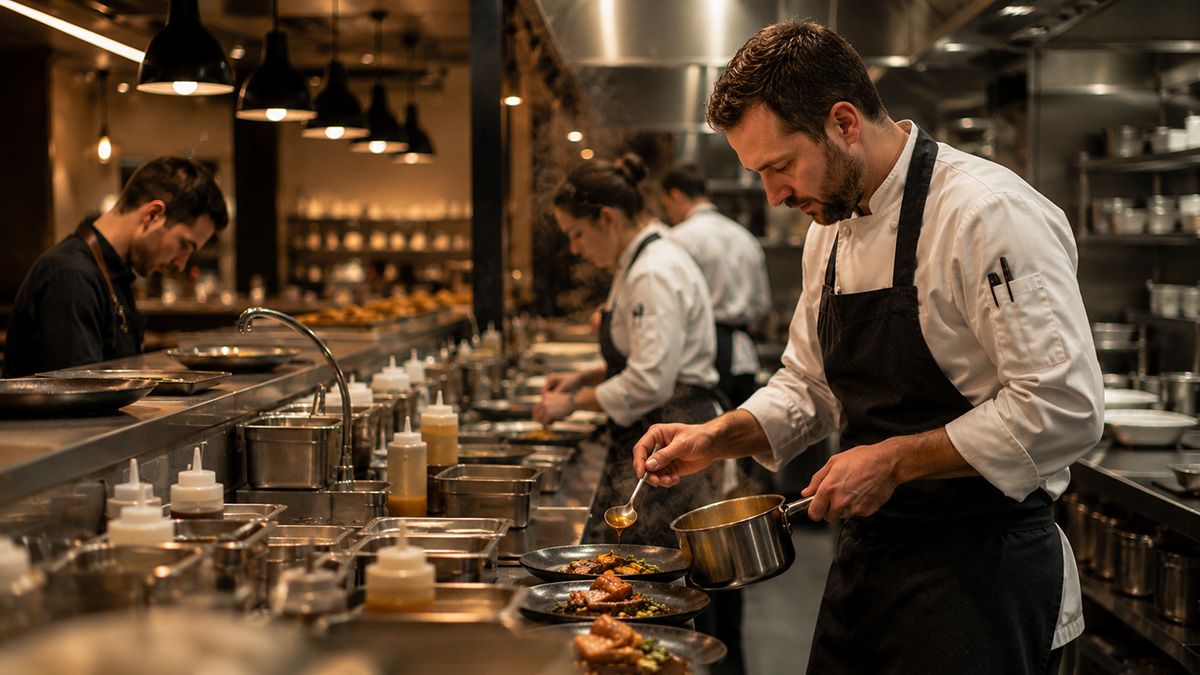
The welcome may feel effortless, but it is usually supported by preparation that began long before the first table was occupied. Staff have been trained, service routines have been refined, roles have been clarified, and countless practical decisions have been made about how the team will work together during a busy service. Customers rarely notice those individual choices, but they experience the result every time a venue feels calm rather than chaotic.
That hidden preparation reinforces the central idea running through hospitality.
If customers experience a venue as one connected system, then the work behind the scenes matters just as much as the parts they can immediately see. Operational decisions influence atmosphere because they shape how confidently people move through the space, how easily customers find help and how consistently the team delivers the experience the venue promises.
Many of the greatest operational improvements are almost invisible.
Customers are unlikely to leave talking about staff briefings, role allocation or the way a service routine has been organised. They are far more likely to remember that everything appeared to work naturally. Service felt joined up. Questions were answered quickly. Staff seemed confident, coordinated and available whenever they were needed.
Drawing on its work with independent hospitality venues, including the Bold Street House project in Warrington, the team at The T-Shirt Bakery, a UK custom uniform supplier, shared several observations about how staff presentation influences the wider customer experience.
One observation appeared repeatedly across different hospitality environments. The most successful uniform decisions rarely begin with branding. They begin with function.
Before choosing colours, embroidery or logo placement, operators often ask a more useful question: What does the uniform actually need to do?
The answer usually extends well beyond appearance.
During a busy lunch service, customers should be able to recognise who can help them without hesitation. Team members need clothing that remains comfortable throughout long shifts and allows them to move confidently through the venue. Managers benefit when permanent employees and temporary staff present a consistent, recognisable presence, even as service becomes more demanding.
Those practical considerations often influence the customer experience more than decorative branding ever could.
A thoughtfully designed uniform does not compete for attention. It quietly supports the wider environment, allowing customers to instinctively recognise who can help them without interrupting the atmosphere the venue has worked hard to create. Staff spend less time overcoming avoidable points of friction, and the venue feels more organised without appearing overly managed.
The team also observed that restrained branding often produces stronger results than making a logo the dominant feature.
In many independent cafés, bars and restaurants, the venue itself should remain the focus. Customers remember the atmosphere, the food, the conversations and the people who looked after them. Staff presentation works best when it feels like a natural extension of that environment rather than a separate piece of marketing.
That idea reflects the wider principle behind every successful hospitality experience.
The strongest operational decisions rarely draw attention to themselves. They remove uncertainty, reduce friction and allow customers to relax because everything around them feels consistent.
The Small Decisions Customers Remember Without Realising
Customers rarely leave a restaurant discussing the exact lighting level, the layout of the service station or where the team kept spare menus.
Instead, they remember how the venue made them feel.
That memory is built from dozens of small decisions accumulating over the course of a visit. None of them carries the experience on its own, but together they create something that feels intentional rather than accidental.
For many independent venues, thoughtfully designed hospitality uniforms are one practical way of reinforcing those wider decisions, helping staff remain easy to recognise while supporting a more consistent customer experience.
On their own, uniforms cannot create a memorable hospitality brand.
They become valuable because they support everything happening around them. Alongside thoughtful service routines, clear communication, confident staff, welcoming surroundings and a strong understanding of the venue's identity, they contribute to an experience that feels complete rather than fragmented.
Customers rarely stop to identify which individual details created that feeling.
They simply remember leaving with confidence that the venue knew exactly what it wanted to be.
Conclusion
By the time a customer opens the menu, the venue has already communicated far more than its food and drink offering.
The atmosphere, the welcome, the confidence of the team and the countless operational decisions working quietly behind the scenes have already shaped expectations. Customers experience those elements together, not as separate decisions but as one connected system.
That is why the strongest independent hospitality brands rarely rely on one standout feature to distinguish themselves.
They create coherence.
Every visible and operational decision supports the same promise, allowing customers to settle into the experience without questioning why everything feels so natural.
Long after the meal has finished, most customers will remember neither the lighting nor the logo.
They will remember how the place made them feel—and that is usually the result of dozens of thoughtful decisions working together.